Gave away all his chore money to the homeless

This guy right here is such an amazing child.  I paid him his chore money of $30.00 and he made me stop for this family with 2 children on the corner and gave them all his money.  I was blown away with the kindness in his heart, he always gives to people and is always concerned for everyone out there, he is so kind hearted, I am so proud to call him my son Trayveon.  He is making a difference in peoples lives at this young tender age. I love him so and I know his daddy is smiling down on him from heaven to.

1902027_10204542534099702_581009053340896774_n

Stranger Danger for our children is of the utmost importance

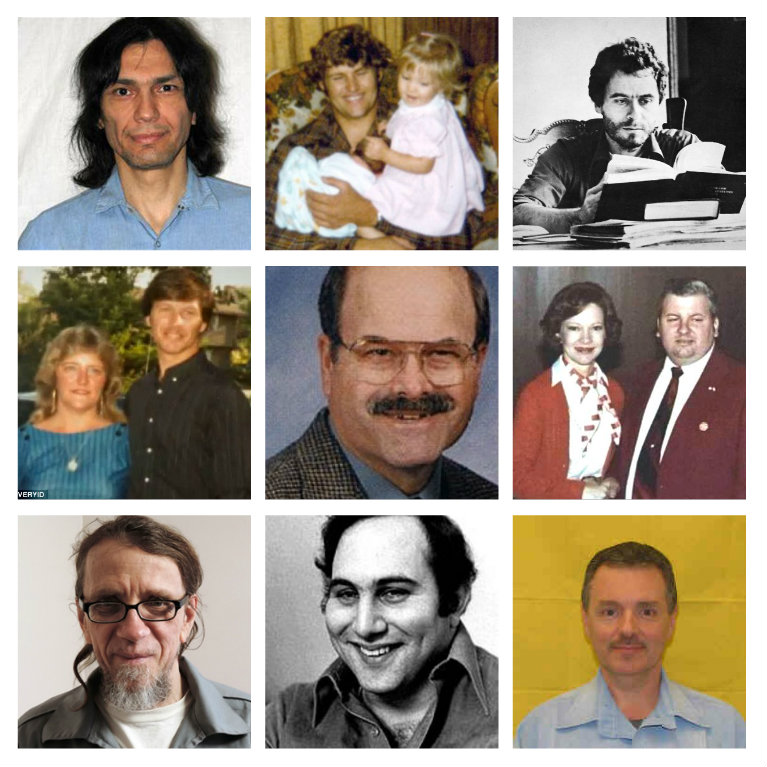
If you look at the picture below, I think my sons would trust anyone of these men based upon looks alone and of course based on how they approached them.  Scary and the stone cold truth, being a child and so innocent their instinct is to trust people, not see the bad in them.  It is so sad that the world we live in we have to bring our children up to fear people instead of trusting them.  Stranger danger so needed for every child out there!

All males pictured are serial killers:

pizap.com14172496638121

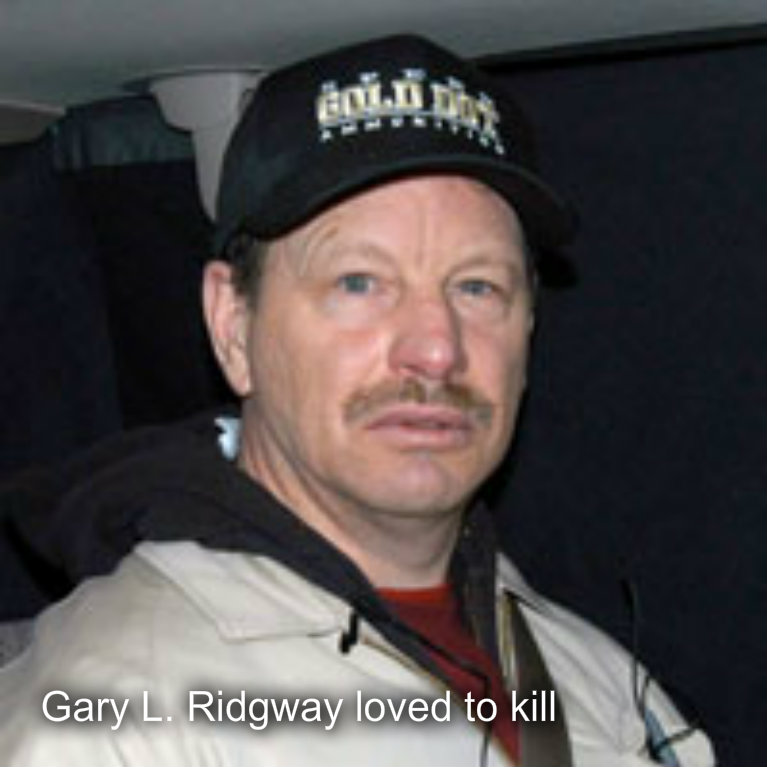
Gary Ridgway mentally ill

Victims of Gary Ridgway

http://www.komonews.com/news/archive/4109381.html

  • Wendy Lee Coffield, 16 – July 8, 1982, in Tacoma. Body found in Green River July 15, 1982, near Kent.
  • Gisele Ann Lovvorn, 17 – July 17, 1982, near Seattle-Tacoma International Airport. Found Sept. 25, 1982, south of airport.
  • Debra Lynn Bonner, 23 – July 25, 1982, south of Sea-Tac Airport. Found Aug. 12, 1982, in the Green River near Kent.
  • Marcia Faye Chapman, 31 – Aug. 1, 1982, south Seattle suburbs, headed for Sea-Tac strip. Found Aug. 15, 1982, Green River.
  • Cynthia Jean Hinds, 17 – Aug. 11, 1982, near the Sea-Tac strip. Found Aug. 15, 1982, on bank of Green River near Kent.
  • Opal Charmaine Mills, 16 – Aug. 12, 1982, at a public phone booth off Sea-Tac strip. Found Aug. 15, 1982, Green River, Kent
  • Terry Rene Milligan, 16 – Aug. 29, 1982, on Pacific Highway South. Found April 1, 1984, off Star Lake Road in south King County.
  • Mary Bridget Meehan, 18 – Sept. 15, 1982, on Pacific Highway South. Found Nov. 13, 1983, in south Seattle suburbs.
  • Debra Lorraine Estes, 15 – Sept. 20, 1982. Found May 30, 1988, in Federal Way.
  • Linda Jane Rule, 16 – Sept. 26, 1982, last seen leaving a motel room on Aurora Avenue North, on her way to Kmart to shop for clothes. Location where and date when remains were found not immediately available.
  • Denise Darcel Bush, 22 – Oct. 8, 1982, last seen around noon on Pacific Highway South. Body appears first to have been left in wooded area in Tukwila, south of Seattle. Some skeletal remains found there Feb. 10, 1990. Her skull was found June 12, 1985, in Tigard, Ore. Investigators believe killer moved part of her remains.
  • Shawnda Leea Summers, 17 – Oct. 9, 1982, downtown Seattle. Found Aug. 11, 1983, north of Sea-Tac airport.
  • Shirley Marie Sherrill, 18 – between Oct. 20 and Nov. 7, 1982, in Seattle’s International District. Remains found June 14, 1985, in Tigard, Ore., along with those of No. 11, Denise Bush.
  • Colleen Renee Brockman, 15 – about Dec. 24, 1982. Family last saw her Dec. 23, 1982. Found May 26, 1984, near Sumner, Pierce County.
  • Alma Ann Smith, 18 – March 3, 1983, on Pacific Highway South. Found April 2, 1984, in Star Lake area.
  • Delores LaVerne Williams, 17 – March 8, 1983, at bus stop on Pacific Highway South. Found March 31, 1984, near Star Lake.
  • Gail Lynn Mathews, 24 – April 10, 1983, on Pacific Highway South. Found Sept. 18, 1983, near Star Lake.
  • Andrea M. Childers, 19 – April 16, 1983. Found Oct. 11, 1989, south of Sea-Tac airport.
  • Sandra Kay Gabbert, 17 – April 17, 1983, on Pacific Highway South. Found April 1, 1984, in Star Lake area.
  • Kimi-Kai Pitsor, 16 – April 17, 1983, in Seattle. Skull found Dec. 15, 1983, near Auburn cemetery. Other remains found there January 1986.
  • Marie M. Malvar, 18, April 30, 1983, at a store on Pacific Highway South. Found Sept. 29, 2003, near Auburn.
  • Carol Christensen, 21 – May 3, 1983, on Pacific Highway South. Found May 8, 1983, in Maple Valley.
  • Martina Theresa Authorlee, 18 – May 22, 1983, at hotel on Pacific Highway South. Found Nov. 14, 1984, near Enumclaw.
  • Cheryl Lee Wims, 18 – May 23, 1983, in Seattle. Found March 22, 1984, just north of Sea-Tac airport.
  • Yvonne Shelly Antosh, 19 – May 31, 1983, on Pacific Highway South. Found Oct. 15, 1983, near Lake Sawyer.
  • Carrie A. Rois, 15 – May 31 to June 13, 1983, in south Seattle suburbs. Found March 10, 1985, in Star Lake area.
  • Constance Elizabeth Naon, 21 – June 8, 1983, on Pacific Highway South. Found Oct. 27, 1983, just south of Sea-Tac airport.
  • Kelly Marie Ware, 22 – July 19, 1983, at a Seattle bus stop. Remains found Oct. 29, 1983, in south Seattle suburbs.
  • Tina Marie Thompson, 22 – July 25, 1983, Sea-Tac strip motel. Found April 20, 1984, near state Highway 18 and Interstate 90.
  • April Dawn Buttram, 17 – Aug. 18, 1983, when police spoke to her in south Seattle suburbs. Found Aug. 30 and Sept. 2, 2003, in a wooded area near Snoqualmie, about 26 miles east of Seattle.
  • Debbie May Abernathy, 26 – Sept. 5, 1983, when she left her apartment to go to downtown Seattle. Found March 31, 1984, 12 miles east of Enumclaw.
  • Tracy Ann Winston, 19 – Sept. 12, 1983, in Seattle’s Northgate Mall. Found March 27, 1986, near the Green River in Kent.
  • Maureen Sue Feeney, 19 – Sept. 28, 1983, at Seattle bus stop. Found May 2, 1986, off Interstate 90 near North Bend.
  • Mary Sue Bello, 25 – Oct. 11, 1983, on the Sea-Tac strip. Found Oct. 12, 1984, east of Enumclaw.
  • Pammy Avent – Oct. 26, 1983, 4600 block of 44th Avenue South, Seattle. Found Aug. 16, 2003, off state Highway 410 near Enumclaw.
  • Delise Louise Plager, 22 – Oct. 30, 1983, at a bus stop in south Seattle suburbs. Found Feb. 14, 1984, near Interstate 90 east of North Bend.
  • Kimberly L. Nelson, also known as Tina Tomson and Linda Lee Barkey, 26 – Nov. 1, 1983, at bus stop on Pacific Highway South. Found June 14, 1986, off Interstate 90 near North Bend.
  • Lisa Yates, 26 – Dec. 23, 1983, in south Seattle. Found March 13, 1984, off Interstate 90 east of North Bend.
  • Mary Exzetta West, 16 – Feb. 6, 1984, in south Seattle. Found Sept. 8, 1985, in Seattle’s Seward Park.
  • Cindy Anne Smith, 17 – March 21, 1984, hitchhiking on Pacific Highway South. Found June 27, 1987, off Highway 18 near Green River Community College.
  • Patricia Michelle Barczak, 19 – October 1986 along Pacific Highway South near Sea-Tac Airport. Skull found seven years later by a survey crew working along Highway 18 in Auburn.
  • Roberta Joseph Hayes, 21 – Last seen leaving a Portland, Ore., jail in 1987. Remains found Sept. 12, 1991, along Highway 410 east of Enumclaw.
  • Marta Reeves, 37 – Disappeared 1990. Remains found September 1990 along Highway 410 near Enumclaw.
  • Patricia Yellow Robe, 38 – Disappeared 1998. Found Aug. 6, 1998, in a vacant lot on Des Moines Way South near Highway 99.

Gary Ridgway’s wife he was the perfect husband and perfect murderer

http://www.dailymail.co.uk/news/article-2056798/Judith-Mawson-finding-husband-Green-River-Serial-Killer-Gary-Ridgway.html

‘I had the perfect husband… but he was the perfect murderer’: Wife reveals moment she found out she was married to Green River Serial Killer who murdered up to 70 women

Newly single after a failed marriage, she was swept off her feet by a man she describes as being ‘perfect’ and who would later become her second husband.

But it turned out that Judith Mawson’s husband was far from perfect as, after 13 years of marriage,  she discovered he was the Green River Serial Killer with the blood of up to 70 women on his hands.

When Judith, 67, met Gary Ridgway at a bar in Seattle in 1985, she recalled he seemed like the perfect suitor – he was handsome, polite, had a good job, and treated her like a lady.

Trusting: Judith Mawson, 67, had no idea that her devoted husband of 13 years was America's most prolific killer

Trusting: Judith Mawson, 67, had no idea that her devoted husband of 13 years was America’s most prolific killer

In love: Around 1985, Ridgway began dating Judith Mawson, who became his third wife in 1988. She said he was the 'perfect husband'

In love: Around 1985, Ridgway began dating Judith Mawson, who became his third wife in 1988. She said he was the ‘perfect husband’

Sentencing: In 2003, Ridgway received 48 life sentences, with out the possibility of parole, for killing 48 women over the past 20 years in the Green River Killer serial murder case

Sentencing: In 2003, Ridgway received 48 life sentences, with out the possibility of parole, for killing 48 women over the past 20 years in the Green River Killer serial murder case

She found a man she adored and wanted to spend the rest of her life with. Two years later they moved in together, a year after that they were married.

‘He made me smile everyday. I had the perfect husband, perfect life. I absolutely adored him.’

But Ridgway was also the perfect killer.

For 13 years Judith was living with the most prolific serial killers in U.S. history. She never suspected a thing.

She told People Magazine that she believed him when he told her his carpet was destroyed by kids and removed and that his ex-girlfriend had taken her bed back. She trusted him when he said he was late because of a union meeting.

Happiness: They married after three years together and she said she lived a perfect life with a husband who made her 'smile every day'

Happiness: They married after three years together and she said she lived a perfect life with a husband who made her ‘smile every day’

Shackled: Gary Ridgway pleaded guilty to 48 counts of aggravated first degree murder in the Green River killing cases as part of a plea bargain with prosecutors

Shackled: Gary Ridgway pleaded guilty to 48 counts of aggravated first degree murder in the Green River killing cases as part of a plea bargain with prosecutors

When police turned up at her door one chilly November morning she realised that her ‘perfect’ life with her husband was one big lie.

THE GREEN RIVER SERIAL KILLER: A KILLING SPREE THAT LASTED 20 YRS

Ridgway preyed on female runaways, prostitutes and drug addicts in a killing spree that terrorised Seattle and its surrounding suburbs in the 1980s.

He was not arrested until 2001, when DNA technology advances helped authorities to link a saliva sample from 1987 to the bodies. He pleaded guilty two years later.

Ridgway is serving life without release in solitary confinement at the state prison in Walla Walla, where he is allowed out of his cell for only one hour a day four times a week.

His youngest known victims, Debra Lorraine Estes, Carrie A. Rois and Colleen Renee Brockman, were just 15 when they died.

He would have sex with the women then strangle them from behind, often in his own home.

He removed their jewellery and clothes and then placed their bodies in what he called ‘clusters’ so he could keep track of them all, he said.

‘I was crying, no it cant be him. Then I found out that he’d had the carpets removed because he’d killed women on them  and there were bloodstains.

‘He’d had sex with some of them on the bed and killed them. I look back and think, “Was my life real with him or did he just use me?”.’

Gary Ridgway, now 62, is suspected of murdering more than 70 women in the Seattle area over a period of 20 years.

It took two years after his arrest to plead guilty to 48 of the murders in exchange for life without parole instead of the death penalty.

In February of this year he pleaded guilty to a 49th murder, after the skull of Rebecca Marrero, 20, was found. She died in 1982.

He is currently housed in a Washington prison in solitary confinement. He is allowed out of his cell for one hour  day, four days a week.

When he was first arrested, Judith said she believed her husband when he told her they had the wrong man.

When she visited the former truck painter in jail she said: ‘We were trying to touch each other through the glass. I would cry.’

When he confessed she cut all contact with him and spent the next two years hiding at home in virtual isolation, drowning her sorrows in wine and pain pills.

She told People: ‘I was scared, in hiding, ashamed. I dreamed about him all the time. he kept reaching out to me.’

image001.jpg
image001.jpg
Victims:

Victims: Ridgway pleaded guilty to the murder of 49 women but his killing spree is believed to have totalled 70

Nancy Gabbert, mother of Sandra K. Gabbert who was murdered by Gary Ridgway, the Green River killer, weeps as the charges involving the murder of her daughter were read in court

Nancy Gabbert, mother of Sandra K. Gabbert who was murdered by Gary Ridgway, the Green River killer, weeps as the charges involving the murder of her daughter were read in court

Jim Bailey, Ridgway’s best friend and coworker said he couldn’t even talk about the arrest for three years after his arrest, he was so stunned and upset.

His wife Linda tried to reach out to her and when it seemed she wasn’t getting any better, she suggested she write a book to help her heal.

Her book Green River Serial Killer: Biography of an Unsuspecting Wife came out in 2007 and though it helped her recover, she said she will never forgive her husband.

‘Telling my story, getting all the poison out of me helped me to heal. But how do you forgive someone who is suspected of killing 70 women?’

Judith has not dated since her husband’s arrest, believing she may never trust another man again but spends her time with friends and at her local church.

Read more: http://www.dailymail.co.uk/news/article-2056798/Judith-Mawson-finding-husband-Green-River-Serial-Killer-Gary-Ridgway.html#ixzz3KRVyNfxL
Follow us: @MailOnline on Twitter | DailyMail on Facebook

Killing was my career Gary Ridgway

pizap.com14172472267252

Why did Ridgway do it? Experts say he’s like other serial killers

Seattle Times staff reporter

This much is clear: Gary L. Ridgway loved to kill.

The mystery is why.

In months of interviews with detectives, which were summarized in court documents, the Auburn truck painter divulged graphic details of his 20-year, Green River murder spree but seemed unable to articulate his motivation.

He said the prostitutes he strangled were “garbage.” He said he had murderous and sexual fantasies about his mother. He admitted he lacks something most people possess: caring.

But the serial killer seemed less concerned with probing his own mind than explaining the techniques he used to kill 48 young women and elude police.

“I never really thought about it,” Ridgway told a forensic psychologist who asked if he worried about having mental problems.

In that lack of introspection — and many of his other characteristics — Ridgway is typical of serial killers, say experts who have studied and stalked the rare breed of criminal.

“It’s like he read the book,” said Dr. Jack Levin, director of the Brudnick Center on Violence at Northeastern University in Boston and author of several books on serial murder. “He’s the classic, prolific serial killer.”

Though much is known about the personality traits most serial killers share, experts are still at a loss to explain what drives them to kill over and over again. Research hints that brain chemistry and structure may play a central role, but environment and upbringing are undoubtedly crucial as well.

“There’s a lot of speculation, but there’s not a lot of hard and fast data,” said Dr. Bruce Gage, a University of Washington professor and lead psychiatrist for Western State Hospital’s criminal unit.

While most people are so averse to causing harm that they will swerve their cars to avoid a squirrel, a lack of empathy and the ability to de-humanize victims are part of what allows a man like Ridgway to kill repeatedly, experts agree.

“He lacks the understanding of what it would feel like to go through what he put people through,” said Dr. Michael McGrath, a forensic psychiatrist and president of the Academy of Behavioral Profiling.

“They don’t mean anything to me,” Ridgway said of the women he killed. He forgot what they looked like. He once choked a 16-year-old girl face to face but didn’t like watching her as she gasped for air and died. He told detectives he didn’t want images like that in his memory, so he strangled other victims from behind.

But it’s not completely accurate to say serial killers aren’t aware of their victims’ suffering, Levin pointed out. It’s that agony that gives the killer so much pleasure.

“Something that would make you or me squirm makes them feel wonderful,” he said.

Extreme self-absorption and indifference to social norms are also common hallmarks of serial killers.

Though Ridgway gave little thought to his victims, he complained about the inconvenience involved in disposing of their bodies. Two decades after one of the murders, he remembered his irritation at breaking a taillight on his truck while unloading a corpse.

Even Ridgway was initially reluctant to admit to one abhorrent act: having sex with many of his victims after they were dead. Once he started talking about it, though, he freely detailed his actions, even describing the decomposition of the corpses.

Many serial killers shun the company of others, but Ridgway married three times, had several girlfriends and a son — though it seems his feelings for them didn’t run very deep.

He said he wanted to kill his second wife by burning down their house but feared he wouldn’t get away with it. He was tempted to kill his third wife.

His son he used as a cover to gain the trust of prostitutes, who lowered their guard after seeing pictures of the boy or his toys scattered around his father’s truck and house. Ridgway once picked up a woman with his son in the truck and told the boy to wait in the vehicle while they took a walk in the woods. Ridgway had sex with the woman, killed her, then joined the 7-year-old boy in the truck. Had his son seen the murder, Ridgway told police, he might have killed him, too.

‘I had control of her’

By necessity, serial killers are secretive, and Ridgway excelled at keeping his mouth shut. He also excelled at presenting an innocuous face to the world.

“He’s been able to wear his mask longer than anybody else and get away with it,” said Robert Keppel, a former chief investigator for the Washington Attorney General’s Office who now teaches about serial killers at Sam Houston State University in Texas.

Ridgway maintained his mask by mentally separating his life into distinct segments, experts say. He rarely missed work at the Kenworth truck plant. He went on family outings, paid his bills, took out the trash — all while planning his kills and carrying them out.

“He had definitely compartmentalized his life,” said detective Randy Mullinax, one of the Green River Task Force detectives who interviewed Ridgway. “He had work. He had family. And he had killing.”

Though his job was menial and his family life unsatisfying, no one disputes that Ridgway was outstanding at what he called his “career.”

“It was the one real accomplishment in his life,” Levin said. “I’m sure he considers himself the Heisman Trophy winner of serial killing.”

Indeed, the killer told detectives he was “good in one thing, and that’s killing prostitutes.”

In addition to a sense of accomplishment, serial killers seek a sense of control.

Many are unable to control most aspects of their lives, such as job and family. Many have a history of childhood abuse that they were powerless to stop.

“When they are fantasizing about killing or killing someone, they have a sense of control or mastery,” McGrath said.

Ridgway described the dead women as “his property” and said he got great satisfaction from driving past sites where he had dumped bodies. He had nightmares about forgetting the locations and thus losing control of the victims.

“I had control of her when I killed her,” he said, “and I’d have control over her where she was still in my possession.”

The feelings of control, accomplishment and pleasure that accompany each kill can become addictive to the serial killer.

Like a junkie desperate for a fix, Ridgway would tremble with frustration when a woman refused to get in his truck or go into the woods where he could strangle her: “I had to calm down so I wouldn’t look like I was, you know, scared and shaking.”

A role for biology?

Though it’s disturbing to consider, many of the characteristics of serial killers are not completely divorced from normal standards of behavior, many experts point out.

Everybody enjoys accomplishment and needs to exert some control over his or her life. Many people get a rush out of pursuits such as hang gliding that terrify others. Most people can rein in their sense of empathy enough to ignore the homeless, or wish misery on their enemies.

Compartmentalization allows people to carry on affairs while appearing to be loving spouses. And addictions to drugs, alcohol, gambling and risky behavior — such as patronizing prostitutes — are common.

“All human behavior is on a continuum,” McGrath said.

But what is it that pushes serial killers to the far end of that spectrum?

Traditionally, the answer has been a horrific upbringing. Most serial killers were abused as children, many hideously so.

Ridgway denies abuse in his past, but it’s common for killers to lie about that. He acknowledges feeling humiliated by his mother, perhaps because he wet the bed until he was a teenager. He lusted after her and wanted to stab her.

As a child, he smothered a cat. As a teen, he stabbed a boy just to see what it felt like.

All are common signs of an abuse victim lashing out at others.

Yet most abuse victims don’t become serial killers.

Newer studies suggest biology may be more important in shaping the murderous mind than previously believed.

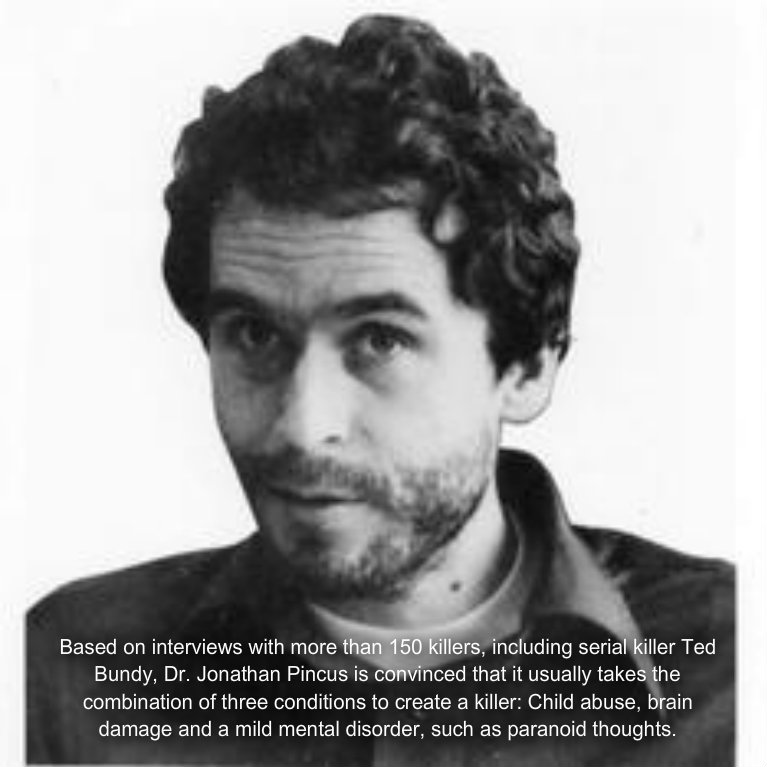
Based on interviews with more than 150 killers, including serial killer Ted Bundy, Dr. Jonathan Pincus is convinced that it usually takes the combination of three conditions to create a killer: Child abuse, brain damage and a mild mental disorder, such as paranoid thoughts.

“I believe the behavior comes from the brain,” said Pincus, author of “Base Instincts: What Makes Killers Kill” and neurology chief at the Veterans Administration Hospital in Washington, D.C.

Schizophrenics and other people with profound mental illness rarely commit murder, especially serial murder, which requires meticulous planning and an ordered mind. But even though most serial killers aren’t legally insane, Pincus said his studies show nearly all have something wrong with their brains. Coupled with the simmering rage fostered by child abuse, the result is violent impulses — and a mind that lacks many of the controls of a normal brain.

Brain scans have shown that many killers have damage to their frontal lobes, part of the higher brain that keeps emotions and impulses in check. Animal studies have even found that slightly different parts of the brain seem to be involved in ordinary, impulse killings and serial murder. In the latter case, there also appear to be powerful pleasure centers in the brain that, when activated, may explain the gratification killing brings to people like Ridgway.

“So maybe what’s required is not just how you’re raised in your first few years, but also faulty wiring and genetics and what happens to you as an adult,” Levin said. “There’s a lot of questions we still can’t answer.”

Seattle Times staff reporter Ian Ith contributed to this report. Sandi Doughton: 206-464-2491 or sdoughton@seattletimes.com

 Copyright © 2003 The Seattle Times Company

Dr. Jonathan Pincus recipe for serial killers…

pizap.com14172468350421

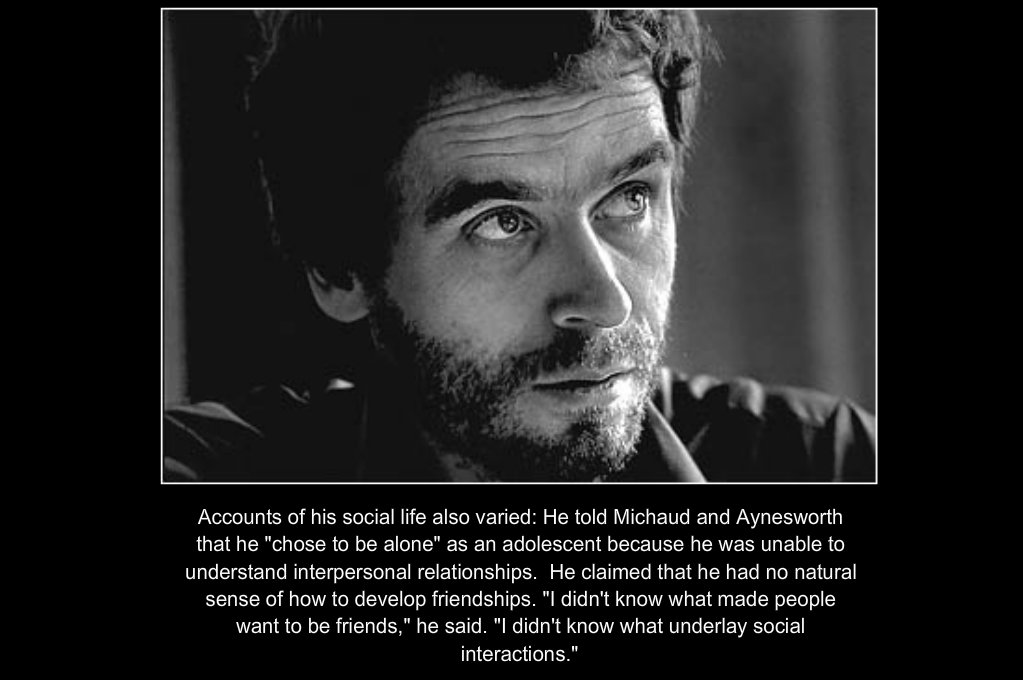
Ted Bundy’s view on friendship

pizap.com141724464432812

Ted Bundy heartless evil

pizap.com141724420892611

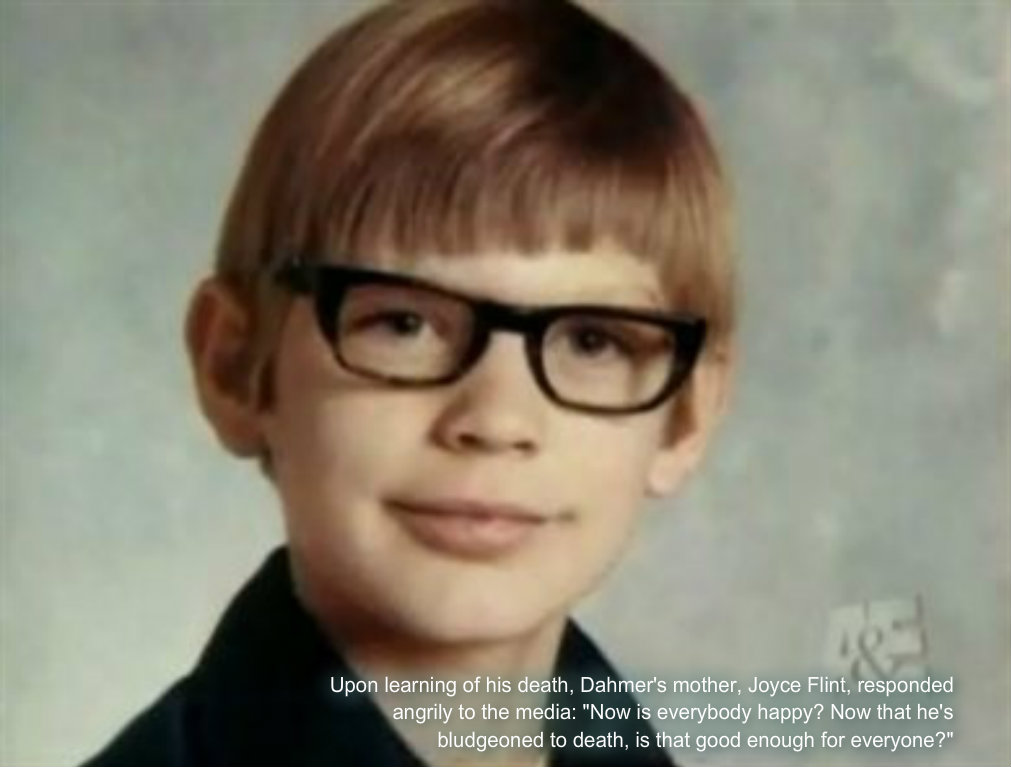
Dahmer’s mother Joyce Flint

It is hard for people to believe but serial killers have family and parents that care deeply for them.  Of course questioning themselves the rest of their lives how, why, etc…  Yes each one of these lost souls are children of God still.  It is hard to see the other families perspective on things because of the crimes they have committed against their victims, but in the end every person no matter how hard to fathom has feelings for their children.

pizap.com141724358141310